







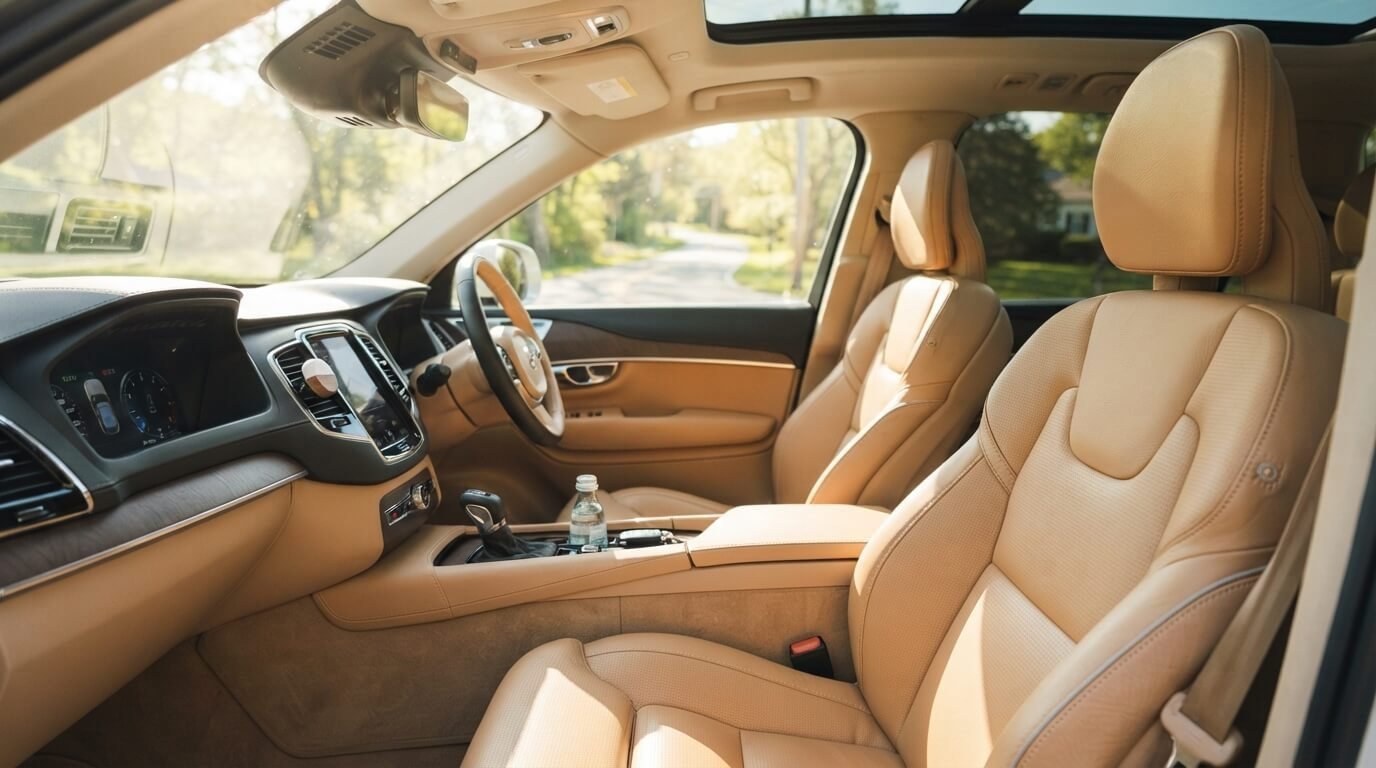
A stale cabin smell, most of the time, points toward trapped moisture, bacteria buildup, or hidden debris in fabric and vents, not simply a lack of fragrance. To really understand how to freshen car interior spaces, first the source of the odor needs to be understood, not only covered up. Bad smells, in most cases, develop slowly, through spills, humidity, dust, and daily use, and this is exactly why a quick spray does not solve the problem for long.
Why Do Car Interiors Start Smelling Stale?
Like a sponge absorbing liquid, fabric seats, carpets, and floor mats absorb odors in a similar manner. Over time, sweat, food crumbs, spilled drinks, even humid weather, soak into these materials. As bacteria feed on this organic matter, the sour or musty smell gets released, and it becomes noticeable especially after the vehicle has been closed up for a few hours.
The problem gets worse because of enclosed spaces. A parked car, unlike a room with open windows, traps warm and humid air inside, and this creates the exact condition where bacteria and mold can multiply faster. That is the reason why the smell often feels stronger after a vehicle has been sitting under the sun, or parked overnight during damp weather.
What Causes the Smell to Come Back After Cleaning?
One frustration people often notice is that a freshly cleaned car smells fine for a day or two, then slowly the old smell comes back. Mostly this happens because the cleaning only touched the surface, not the actual source. Deep inside carpet fibers, seat foam, and door panel padding, odor-causing bacteria can still be living, areas that a simple wipe-down never really reaches.
Moisture left behind after cleaning also adds to this problem. When carpets or seats are not dried fully, a perfect environment gets created for mold and mildew to grow, and because of this, the smell returns, sometimes even stronger than before.
How Does Moisture Affect Car Odor?
Among the hidden triggers behind persistent car smells, moisture stands out as one of the biggest. Wet umbrellas, damp gym clothes, spilled drinks, or even condensation from the air conditioning, all of these can soak into carpets and stay trapped for days. Once dust and organic debris combine with this trapped moisture, mold spores start developing, and a musty odor gets produced that fragrance alone finds difficult to remove.
One of the most effective ways to break this cycle is by drying the interior thoroughly after any exposure to water. Trapped moisture evaporates faster with sunlight and airflow, while inside a closed and humid cabin, bacterial growth only speeds up.
Why Doesn’t Air Freshener Fix the Smell?
By releasing fragrance molecules into the air, air freshener products work in a way that temporarily masks unpleasant smells, rather than removing their actual source. The underlying odor comes back once the fragrance fades away, simply because bacteria, mold spores, or trapped particles causing the smell are still present in the fabric or vents.
This is why depending only on scented products often results in a mixed smell, fragrance combined together with the original odor, instead of a truly clean-smelling interior. When the source of the smell gets removed first, any added scent lasts longer and smells more natural too.
What Role Does the Cabin Air Filter Play?
Air that flows through the ventilation system gets controlled by the cabin air filter, and often this becomes a major, overlooked cause of bad smells when it gets dirty or clogged. Over time, dust, pollen, and moisture collect inside this filter, and every time the fan turns on, a musty odor gets pushed directly into the cabin as air passes through it.
Since this filter stays hidden behind the dashboard or glove compartment, its condition is easy to forget about. Even in vehicles that otherwise look clean, a filter left unchanged for over a year becomes a common hidden source of ongoing odor problems.
Can Natural Ingredients Remove Car Odors Effectively?
Rather than masking odors, certain natural ingredients are genuinely effective at neutralizing them. Baking soda, as an example, absorbs odor molecules directly instead of covering them up with fragrance, which is why it works well on fabric seats and carpets. In a similar way, activated charcoal works too, drawing moisture and odor particles from the surrounding air over an extended period of time.
Usually these methods work best when left in place for several hours, or ideally overnight, since this gives enough time for the material to absorb the smells trapped inside, rather than offering an instant fix.
Does the Type of Odor Change the Cleaning Approach?
Since different smells come from different sources, often a different solution gets required for each. Fabric and even hard surfaces tend to hold onto smoke odor, which needs more thorough deodorizing compared to a simple wipe-down. Pet-related odors, usually coming from proteins in saliva, dander, or accidents, respond better to enzyme-based cleaning, which breaks down organic matter instead of just masking it. Trapped moisture and mold get pointed to by musty, damp smells, meaning the priority becomes drying the affected area completely, rather than adding more fragrance on top.
Better and longer-lasting results come from identifying the type of odor first, before choosing a cleaning method, compared to using the same generic approach for every smell that comes up.
How Long Does It Take for a Car Interior to Smell Noticeably Better?
Within minutes, a noticeable difference can be made through surface-level improvements, such as removing trash and vacuuming. However, odors trapped deeper in fabric or filters usually take longer to resolve fully. To show their full effect, odor absorbers like baking soda or charcoal often need several hours, sometimes overnight, while musty smells caused by trapped moisture may need a few days of proper drying and airflow before disappearing completely.
During this process, patience matters a lot, since the most common reason smells return quickly after an initial clean is rushing through the drying stage, or skipping the actual source of the smell.
Rarely is stale cabin air caused by just one single factor, and that is why understanding how to freshen car interior spaces effectively means looking beyond fragrance, toward trapped moisture, bacteria, and airflow together. From removing the source of the odor first, allowing surfaces to dry completely, and keeping air filters and ventilation clear, a clean-smelling interior comes, rather than depending on scent alone to solve the problem.