








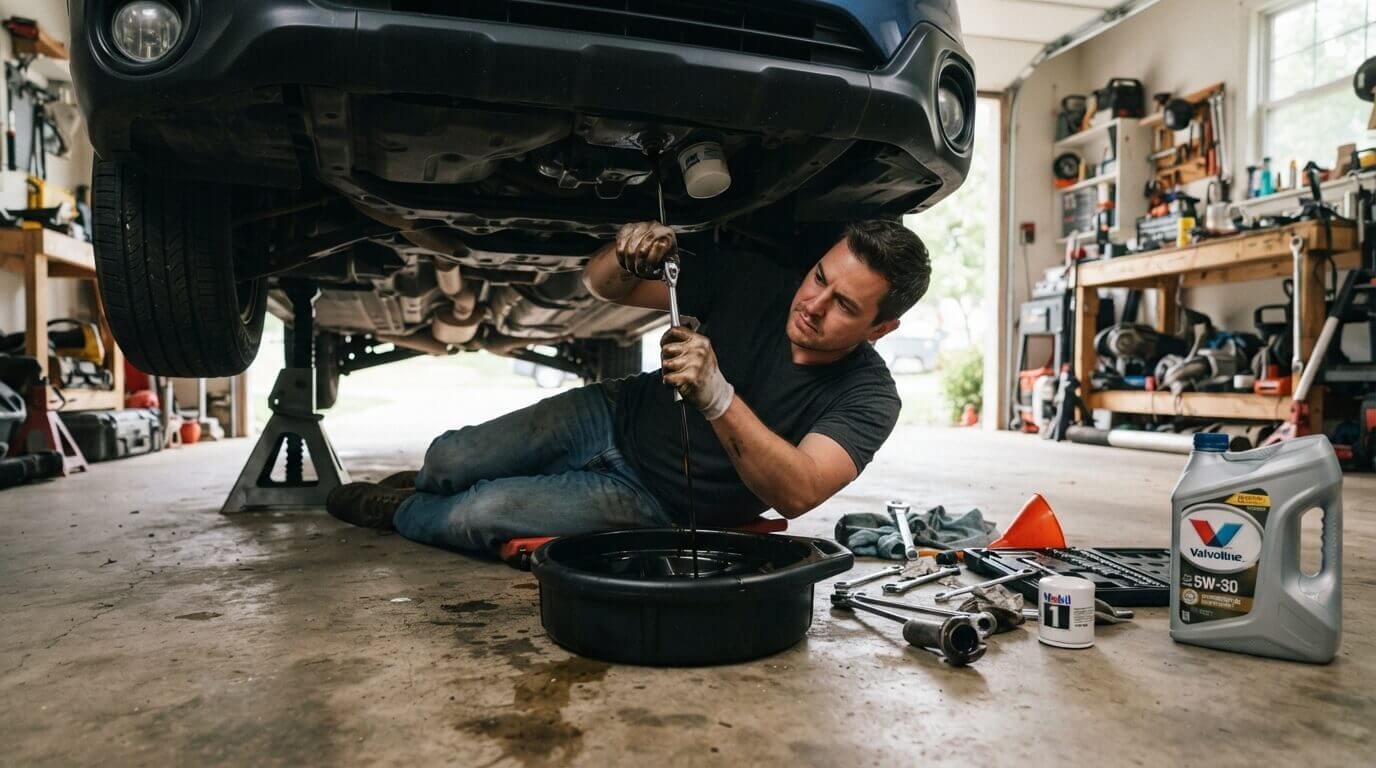
To change oil in a car, the old oil gets drained out from the engine, the oil filter gets swapped for a new one, and then fresh oil is poured back in, a job that many vehicle owners can finish at home within an hour, using only basic tools. Among the simplest ways to keep an engine healthy and avoid expensive repairs later, this task stands out. In this guide, the process is broken into easy steps, the required tools are explained, and answers are given for the common questions drivers usually search before beginning the job.
By keeping engine parts lubricated, fresh oil reduces friction and also carries away heat along with debris. When oil changes get skipped, contaminants start building up, and this can wear down internal parts much quicker, shortening the life of the engine. There is also a money-saving side to doing this at home rather than visiting a shop, something that matters more for people who own more than one vehicle or drive on a regular basis.
Tools and Materials Needed
Getting the right supplies ready before starting is important. When everything is prepared in advance, delays and messes in the middle of the job can be avoided.
- New motor oil (the owner’s manual will list the correct type and amount)
- A new oil filter that matches the vehicle
- An oil filter wrench
- A socket wrench along with the correct socket size for the drain plug
- An oil drain pan
- A funnel
- A jack and jack stands (needed if ground clearance is low)
- Rags or paper towels
- Disposable gloves
Step-by-Step Process to Change Oil in a Car
If these steps are followed in order, spills and mistakes can mostly be avoided.
- Let the engine warm up for two to three minutes. Oil that is warm flows out faster, and it carries more sediment along with it.
- Switch off the engine, then park the car on a flat surface. For safety, the parking brake should be engaged.
- Lift the car with a jack, and if extra clearance underneath is needed, secure it using jack stands.
- Find the drain plug under the oil pan and place the drain pan right beneath it.
- Take out the drain plug slowly with a socket wrench. As oil starts flowing, the hand should be pulled away quickly.
- Allow the oil to drain completely, a process that usually takes between five and ten minutes.
- Put the drain plug back once draining has stopped, along with a new gasket if the old one looks worn.
- Remove the old oil filter with an oil filter wrench, turning it in a counterclockwise direction.
- Rub a small amount of fresh oil onto the rubber gasket of the new filter before it gets installed. Doing this helps the seal form properly.
- Fit the new filter by hand, tightening it snugly but without going too far.
- Pour in fresh oil through the oil filler cap with the help of a funnel, following the amount mentioned in the owner’s manual.
- Check the oil level using the dipstick after a short wait, topping it off if needed.
- Start the engine for a brief moment and check around the drain plug and filter for any leaks.
Walkthroughs like the ones found on Car Magazine often go a step further by adding model-specific tips, which can be useful when the vehicle being worked on is a less common one.
How Often Should Oil Be Changed
For most modern vehicles running on synthetic oil, an oil change is generally needed every 5,000 to 7,500 miles, though some cars with advanced engines can stretch this to 10,000 miles. In older vehicles, or those using conventional oil, the interval tends to be closer to every 3,000 miles. The owner’s manual will always carry the manufacturer’s exact number, since the ideal interval also depends on driving conditions and engine design.
What Happens If Oil Is Not Changed on Time
Over time, old oil starts to break down and loses much of its ability to lubricate properly. As a result, friction between engine parts increases, operating temperatures rise, and components such as the camshaft and pistons wear out faster than they should. This can eventually lead to sludge buildup, poorer fuel efficiency, and in more serious cases, engine damage that ends up costing far more than what routine maintenance would have.
Disposing of Used Oil Safely
Household trash or drains should never be used for disposing of used motor oil. Free drop-off for old oil is usually offered by most auto parts stores and recycling centers nearby. By pouring old oil into a sealed container and taking it for drop-off, soil and water systems can be kept safe, since even a single quart is capable of contaminating a large amount of groundwater if it is not disposed of the right way.
Frequently Asked Questions
How long does it take to change oil in a car?
For someone doing it at home, a typical oil change takes around 30 to 45 minutes, though this can vary based on experience and whether the vehicle needs lifting.
Can oil be changed without a jack?
In some vehicles that sit higher off the ground, the drain plug can be reached without lifting, but for most cars, a jack or ramps are needed to safely get underneath.
Is synthetic oil better than conventional oil?
Generally, better performance in extreme temperatures is offered by synthetic oil, along with a longer gap between changes, though the upfront cost tends to be higher than conventional oil.
What size wrench is needed for an oil change?
Depending on the vehicle, drain plug sizes commonly range from 14mm to 19mm, so checking the owner’s manual or measuring the plug beforehand can help avoid grabbing the wrong tool.
There is no professional training required to change oil in a car, just the right set of tools, a little patience, and close attention at every step. When the process outlined above is followed, an engine stays in smooth running condition for longer, its lifespan gets extended, and money that would have gone toward shop labor costs ends up staying in pocket instead.