








In premium SUVs, the cabin experience matters as much as what is under the hood, sometimes even more. From the digital cockpit of Cayenne to the ergonomic layout inside Macan, every single detail is designed with driver and passengers both in mind, so before sitting behind the wheel, you already know what to expect.
What Makes the Porsche SUV Interior Stand Out?
Behind the Porsche Cayenne and Macan interiors, there is one idea driving everything: driver should feel in control, never overwhelmed. Many rivals bury each function inside a touchscreen, but Porsche has chosen to keep physical switches for climate controls, and this small detail makes a real difference once you are on the road. Comparing a Porsche cabin to the competition, this is among the first things that stands out.
Digital Instrument Cluster
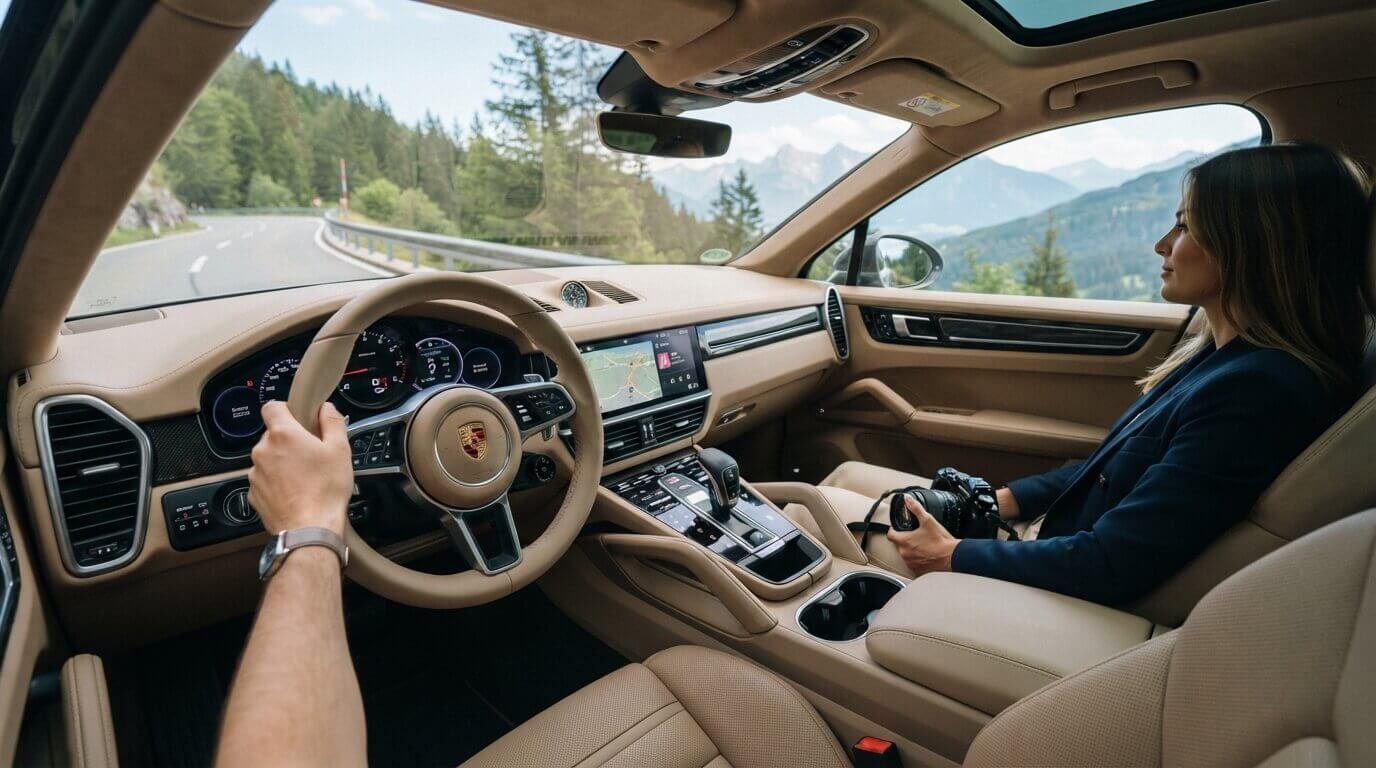
Centerpiece of the modern Cayenne interior is its 12.6 inch, hoodless instrument screen. Traditional analog rev counter is replaced here with a fully digital display, and up to seven layout options are offered, two of which mimic the classic three dial and five dial gauge clusters of Porsche. Heritage design blending with modern technology like this is exactly the kind of detail that becomes worth exploring during a test drive.
Touchscreen & Infotainment Layout
For front seat passengers, a second 10.9 inch touchscreen is also available, through which navigation, media, or entertainment can be controlled independently from driver. Base of the main infotainment display is curved, and a wrist rest area is included too, which makes everyday interactions feel much more natural.
Dashboard & Console Redesign
From the center console, Porsche has moved the gear selector to a small lever placed behind steering wheel, in a way similar to Taycan. Because of this, additional storage space got freed up in console, a practical upgrade that owners tend to appreciate for daily use.
Cabin Air & Climate Technology
Among standout features is the automatic cabin air filtration system, which is able to detect when vehicle is entering a tunnel and activates filtration on its own, blocking outside pollutants. Along with physical climate controls that are retained, this becomes a thoughtful mix between technology and usability.
Materials, Trim & Comfort
Between coppery trim accents and soft touch surfaces, sportiness and luxury are balanced well by the Porsche SUV interior. Even in hybrid models, boot capacity stays generous, though for taller passengers, reduced headroom may be noticed in coupe variants.
Porsche SUV Interior vs. Competitors
| Feature | Porsche Cayenne | BMW X5 | Range Rover Sport |
|---|---|---|---|
| Instrument Display | 12.6″ digital, hoodless | Digital, curved | Digital, curved |
| Climate Controls | Physical switches | Touchscreen-integrated | Mixed |
| Passenger Screen | Optional 10.9″ | Not standard | Optional |
| Cabin Air Filtration | Automatic tunnel-detect | Standard HEPA filter | Standard |
(Above table is based on manufacturer and press information that is publicly available.)
Frequently Asked Questions
Is the Porsche Cayenne interior worth the upgrade over older models?
For daily drivers who value both tech and usability, yes, it is a meaningful step up, since dashboard is redesigned, cluster is now digital, and storage has been added.
Does the Porsche SUV interior feel cramped for taller drivers?
In most trims, headroom stays comfortable, although in Coupe body style, some rear headroom gets traded for a sportier roofline.
What makes Porsche’s interior different from other luxury SUVs?
For essential functions like climate, Porsche keeps physical controls in place, reducing distraction for the driver, a deliberate design choice that many competitors already moved away from.