








Golf cart batteries power everything, from weekend rides on the course to daily errands around the neighborhood, and choosing the wrong one will cost you range, money, and also years of frustration. At Car Magazine, every major battery type in the market was tested and researched by us, so that we can give you a straight answer: what actually works, what lasts long, and what you should buy, based on your driving habits.
What Are Golf Cart Batteries?
Golf cart batteries are, in simple terms, deep-cycle batteries that are built for delivering steady power over long stretches. This is unlike a car battery, which only delivers one short burst to start the engine, then recharges while engine keeps running. A regular car battery is not able to handle the repeated deep discharge that a golf cart demands, things like acceleration, climbing hills, carrying passengers, and constant recharging, so if used this way, it will fail quickly.
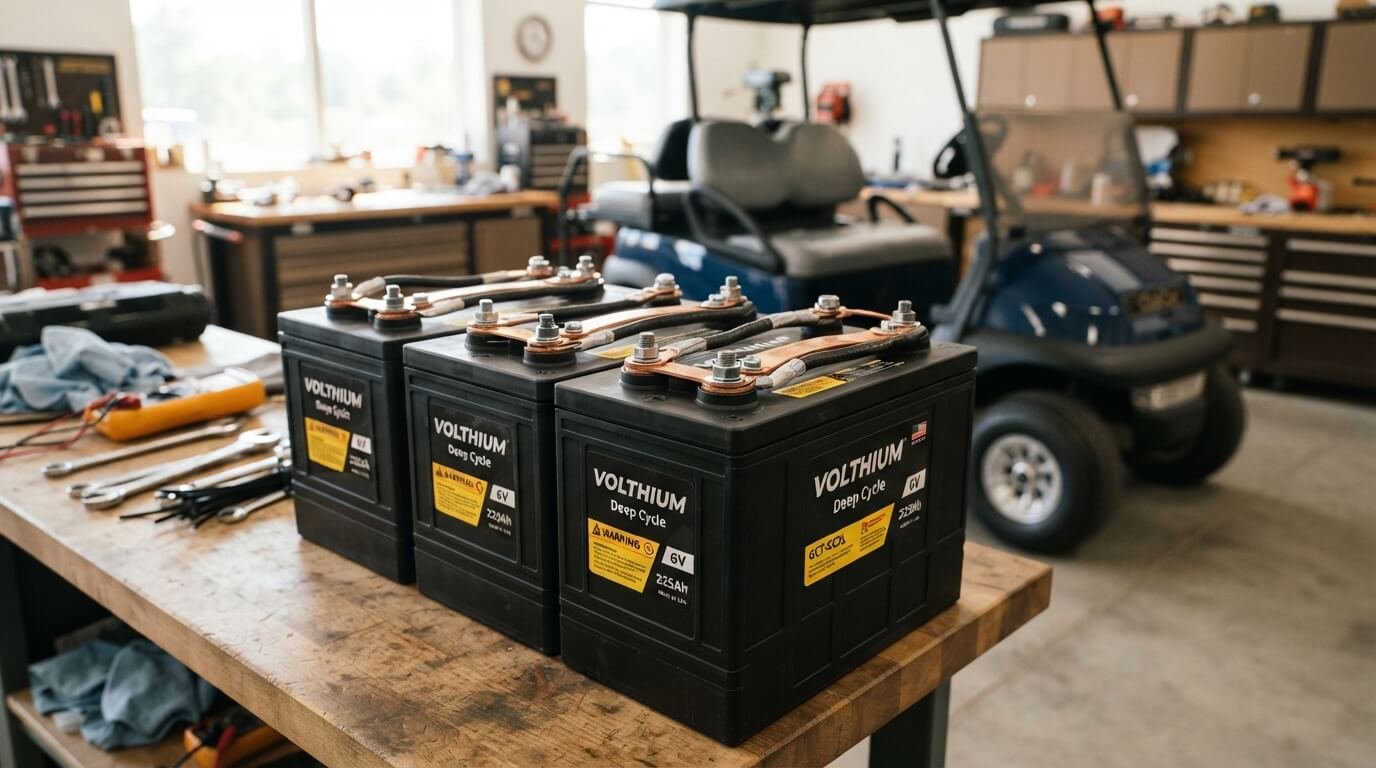
Most of the golf carts run on 36V, 48V, or 72V systems, which are built from individual 6V, 8V, or 12V batteries that are wired together in series. Older Club Car and EZGO models mostly use 36V setups, while the newer carts are increasingly running on 48V lithium packs.
The 4 Main Types of Golf Cart Batteries
Here is Car Magazine’s comparison, side by side, of the four dominant types of batteries.
1. Flooded Lead-Acid (Wet Cell)
This is the most common option and also the cheapest one. It does require regular maintenance, such as topping up the water levels and cleaning the terminals, but the upfront cost stays the lowest among all types. Typical lifespan for this is around 4 to 6 years.
2. AGM (Absorbent Glass Mat)
This is a sealed variant of lead-acid that needs no maintenance. It is more resistant against vibration and also spill-proof, though the cost is higher compared to flooded batteries. Typical lifespan is 5 to 7 years.
3. Gel Battery
Instead of using liquid, this type uses a silica-gelled electrolyte. It needs no maintenance and performs well across a wider range of temperature, which makes it a suitable choice for extreme climates. Lifespan typically stays between 5 and 7 years.
4. Lithium (LiFePO4)
Lithium Iron Phosphate, nowadays, is considered as the gold standard for batteries used in golf carts. It is roughly 70 percent lighter than lead-acid, it charges 2 to 3 times faster, and delivers efficiency up to 98 percent (compared to just 80 to 85 percent for lead-acid), often lasting more than 10 years. The upfront cost is higher for this one, but for frequent drivers, it usually wins when total cost of ownership is considered.
Lithium vs. Lead-Acid: Quick Answer
Is lithium a better option than lead-acid for golf carts? For most of the users, yes, it is. Lithium batteries last almost twice as long, weigh much less, charge faster, and require no maintenance at all. Lead-acid remains a better choice only for the drivers who use their cart occasionally and are on a tight budget, and who don’t mind the periodic watering and cleaning of terminals.
| Factor | Lead-Acid | Lithium (LiFePO4) |
|---|---|---|
| Lifespan | 4–7 years | 10+ years |
| Weight | Heavy | Up to 70% lighter |
| Maintenance | Regular watering | None |
| Charge time | Slower | 2–3x faster |
| Efficiency | 80–85% | Up to 98% |
| Range per charge | 15–25 miles | 25–35 miles |
| Upfront cost | Lower | Higher |
How Long Do Golf Cart Batteries Last?
Golf cart batteries, generally, last somewhere between 4 to 10 years, this depends on the type and also how well they are cared for. Flooded lead-acid averages around 4 to 6 years, AGM and gel average 5 to 7 years, while lithium batteries often go beyond 10 years. The biggest factor that affects lifespan is the charge cycles, meaning one full charge and discharge, so how consistent you are with charging, watering, and storing the battery pack matters more than just its age.
How to Choose the Right Golf Cart Battery
Depending on how you use your cart, here is what Car Magazine recommends:
- For daily or frequent drivers (courses, resorts, communities): Lithium is clearly the winner here, the higher cost upfront pays off through its long life and low maintenance needs.
- For occasional or weekend drivers: Flooded lead-acid stays a practical choice that is friendly on the budget.
- For those wanting something in between: AGM or gel batteries give sealed, low-maintenance performance, without the full price tag that comes with lithium.
- For hot or cold climates: Gel batteries tolerate extreme temperatures in a better way than flooded lead-acid does.
Safety Considerations
During charging, lead-acid batteries produce hydrogen gas and therefore require proper ventilation, and they also contain sulfuric acid, which brings a risk of spilling in case the battery gets damaged. Lithium chemistry (LiFePO4), on the other hand, is among the most thermally stable lithium types that are available, and it resists thermal runaway even under high temperatures, which is one reason why it is becoming the default choice in newer carts.
Frequently Asked Questions
Can a regular car battery be used in my golf cart?
No, it cannot. Car batteries are made for delivering short bursts of starting power, not the sustained deep discharge that a golf cart requires, and using it this way will make it fail before its time.
How often should watering be done for a lead-acid golf cart battery?
Water levels should be checked roughly every 2 to 4 weeks during regular use, and always top it up after charging is done, never before.
Are lithium golf cart batteries actually worth their extra cost?
For those who drive frequently, yes, they are worth it. The longer lifespan, faster charging, and zero maintenance usually make lithium the cheaper option over a period of 10 years, even with its higher purchase price.
Which voltage does my golf cart require?
Most of the electric carts run on 36V, 48V, or 72V systems, so it is best to check your cart’s manual or its existing battery setup before replacing the batteries, to make sure everything stays compatible.
How much does it cost when golf cart batteries need replacement?
The cost varies depending on the type and size of pack, but generally, lead-acid replacement packs remain the cheapest, while lithium packs cost more at first but need replacing far less often.