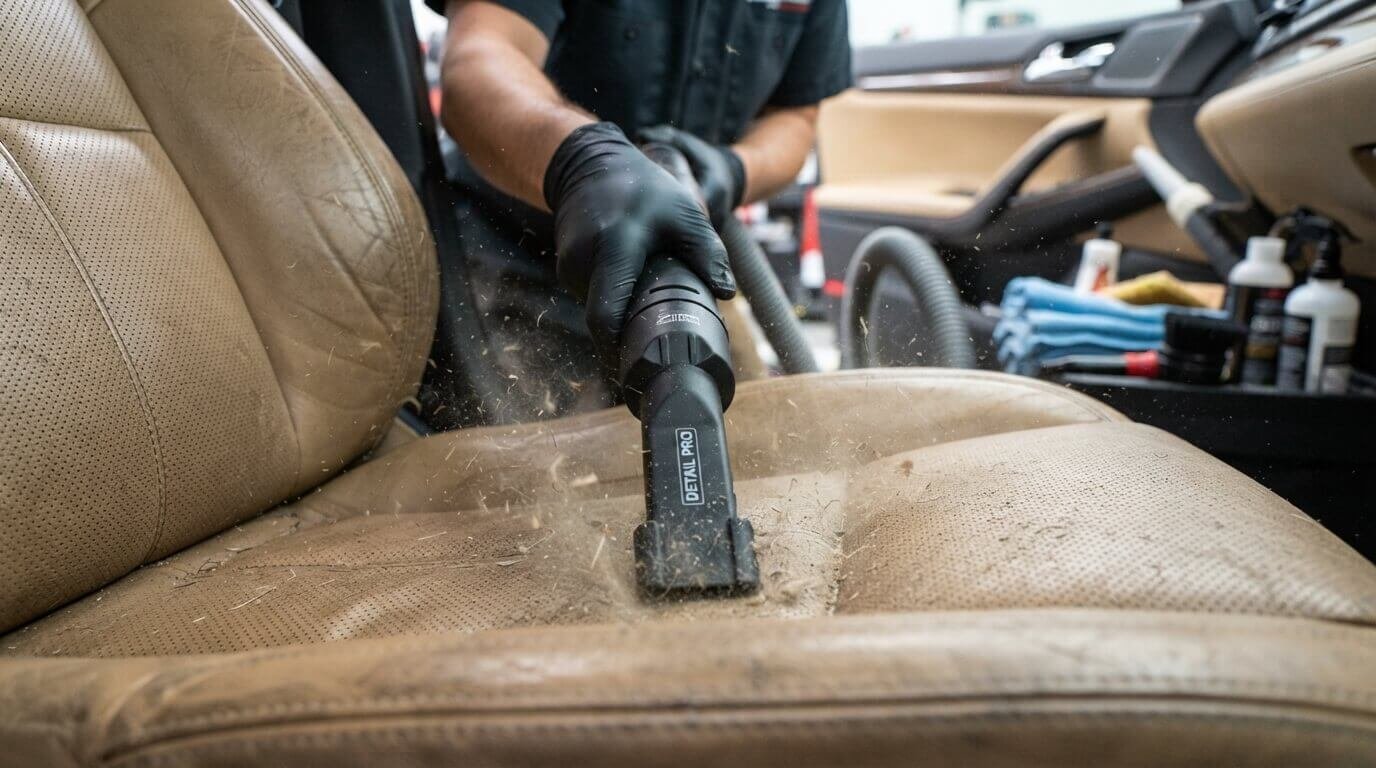









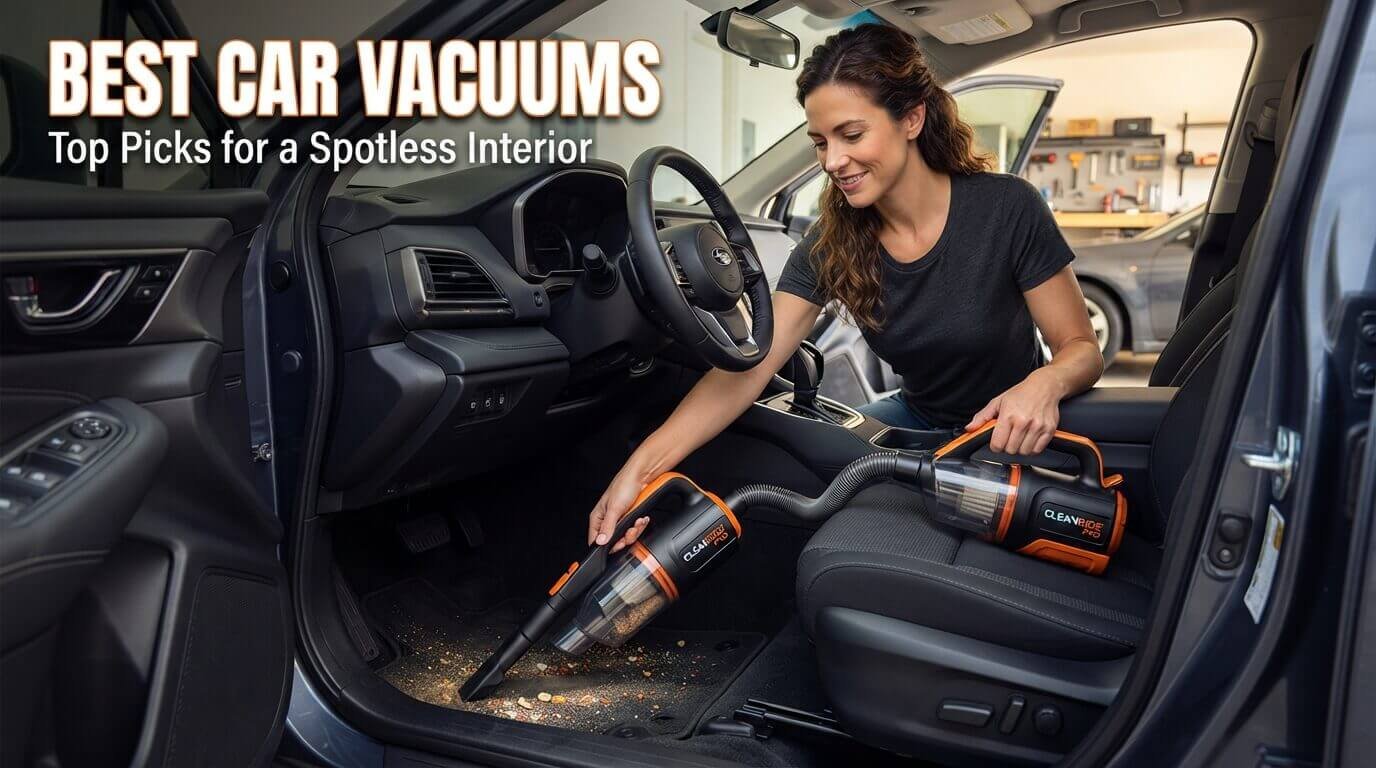
When people search for the best car vacuums, mostly they are trying to find out which machine can handle suction strength, portability, battery life, and tight spaces like seat crevices, floor mats, and trunk corners, all at once. A car interior, compared to a living room floor, collects mess in a very different way, and because of this, tools made for vehicles come with smaller nozzles, flexible hoses, and bodies compact enough to slide under seats or between console gaps. Once a person understands what separates an average vacuum from a truly effective one, it becomes much easier to see why certain models handle pet hair, crumbs, and fine dust so much better than the rest.
What Makes a Car Vacuum Effective
Curves, gaps, and different fabric textures, a car interior has all of these, and a standard household vacuum usually finds them difficult. For a car vacuum to be effective, a few qualities need to come together.
Suction that stays strong and does not fade quickly during use A nozzle narrow enough to reach between seats and console edges A body light enough to carry around door frames without much effort A dustbin that empties easily, without scattering debris everywhere
In a vehicle, these features carry more weight than they would in a house, mainly because the cleaning motion itself is not the same. Rather than pushing the vacuum across open floor space, cleaning a car usually means lifting the device, angling it, and holding it in awkward positions for several minutes straight.
Corded Versus Cordless Designs
Two broad categories exist for car vacuums. One is corded, plugging into a wall outlet or the vehicle’s own power port, and the other is cordless, running instead on rechargeable batteries.
With corded models, power stays steady through the whole session, since battery drain is never a concern. Because of this, they work well for deep cleans that stretch beyond a few minutes. Cordless models, on the other hand, sacrifice a bit of raw power in exchange for freedom of movement, letting a person clean without being tied to an outlet. Between different models, battery life can vary a lot, and suction on cordless units often weakens as the charge runs lower.
How Suction Power Affects Cleaning Results
Usually suction strength gets measured in air watts or kilopascals, though this number by itself does not tell the whole story. How well a vacuum actually lifts debris, instead of just shifting it around, depends also on motor efficiency, nozzle shape, and the path air takes through the machine. A unit with impressive suction numbers but a poorly shaped nozzle may still struggle on textured mats or fabric seats, while a machine with moderate power but a well thought out airflow system can end up cleaning better in real use.
Wet and Dry Cleaning Capabilities
Spills in a vehicle happen often enough that wet and dry functionality has turned into a common feature. In wet and dry vacuums, a sealed motor compartment sits alongside a separate collection tank, so liquid never reaches the internal parts. This setup proves useful for spilled drinks, muddy footprints, or damp dirt carried in on rainy days. Dry only vacuums tend to be lighter and cheaper, but wet material should never go near them, since moisture can lead to motor failure or damage the electrical parts.
Filtration and Allergen Control
More than most people realize, filtration plays a big role, particularly for anyone dealing with allergies or driving around with pets often. Smaller particles such as pollen, dust mites, and pet dander get trapped by HEPA style filters instead of being blown back into the cabin air. Without proper filtration, a vacuum can end up stirring fine particles into the air, only for them to settle right back onto seats and carpet soon after cleaning.
Do Best Car Vacuums Really Work as Well as Home Vacuums?
For vehicle interiors specifically, a car vacuum tends to outperform a general household vacuum, even when the household unit has more raw power on paper. The reason comes down to design, since car vacuums are built for confined spaces, angled surfaces, and shorter bursts of cleaning. Around a gear shifter or inside a door pocket, a large upright vacuum simply has no way to maneuver the way a compact, purpose built unit can.
How Often Should a Car Interior Be Vacuumed?
Under normal use, most vehicles do fine with vacuuming somewhere between every two to four weeks. For cars that carry pets, children, or food on a regular basis, cleaning more often becomes necessary, since crumbs and pet hair build up faster and can work their way into fabric or carpet fibers over time. Vacuuming on a regular basis also keeps dust and allergens from piling up in air vents and along the floor.
Final Thoughts
At the end of the day, choosing among the best car vacuums comes down to matching suction power, portability, filtration, and wet or dry capability with how a vehicle actually gets used. For a car that deals with pet hair often, strong suction paired with fine filtration matters most, while a vehicle used mainly for commuting might only need something light and quick to use. With these core differences in mind, judging which type of vacuum will genuinely keep a car interior clean over time becomes a much simpler task.