








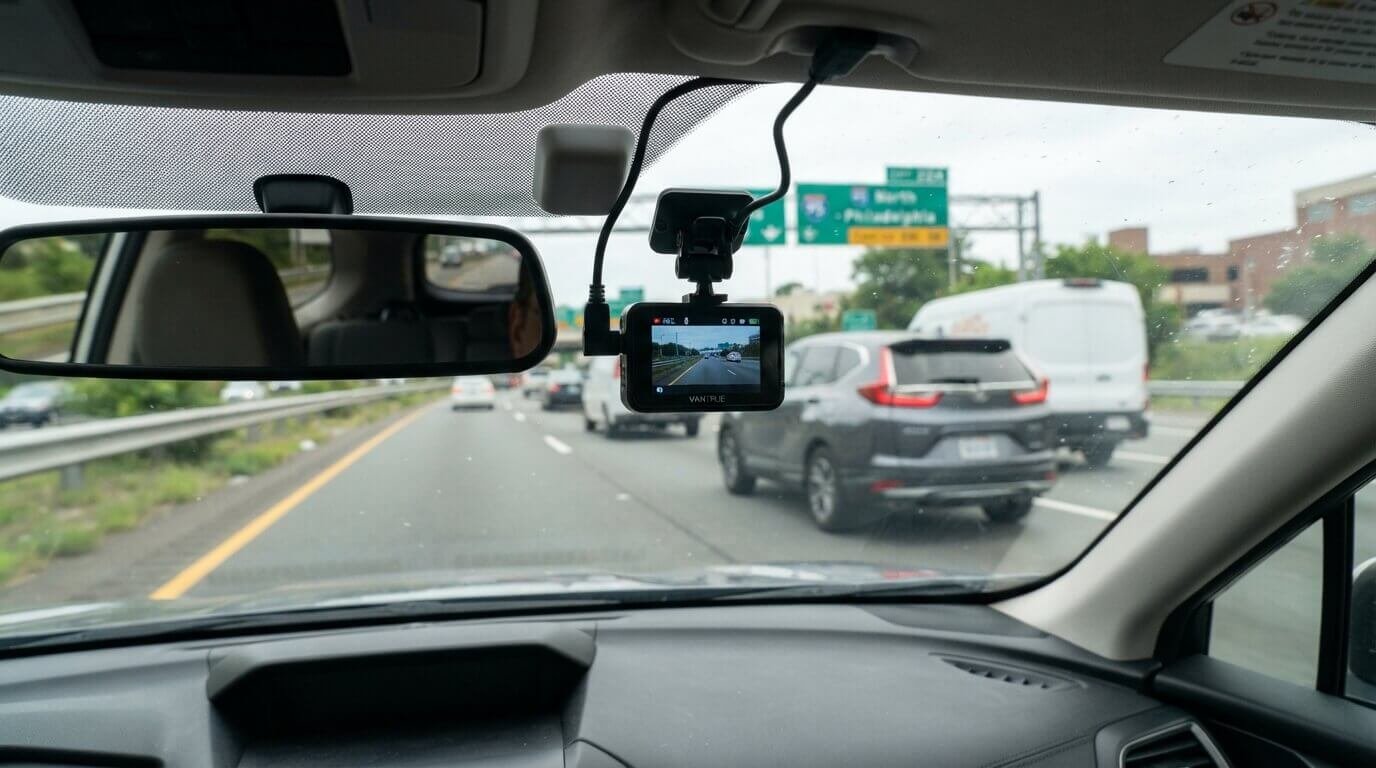
A dash cam is small camera fixed onto a vehicle’s windshield or dashboard, and it keeps recording video of the road all through the drive. Everything that happens in front, behind, or even inside the car gets captured, which then becomes a solid record if there is an accident, a dispute, or theft involved. For most drivers, the main reason to keep this device around is safety and legal backup, because footage often works as proof during insurance claims or roadside incidents. It is not only about accidents though. Many people now use it for parking security, for confirming details during ride share trips, and even just to record memorable moments from a long road trip.
How Does a Dash Cam Work
Inside every unit, there is a small image sensor, a lens, and some onboard storage that keeps the loop recording going. The moment the vehicle starts, the camera turns on by itself and begins saving footage in short clips, mostly between one and three minutes each. Once the memory card gets full, the oldest clips are removed automatically to make space, and this whole process is called loop recording. Most newer devices come with a G sensor too, and its job is to notice a sudden impact or hard braking, then lock that particular clip so nobody can delete it later.
There is also parking mode, which many models include as an added layer of protection. Even with the engine switched off, this feature keeps the camera alert, relying on motion detection or impact sensors to begin recording the moment something happens close to the parked car. Some units go further with GPS logging, keeping track of speed, location, and route, and this can turn out useful when reviewing a past trip or proving exactly where the vehicle was at a given time.
Key Features to Understand
Every camera does not come with the same set of capabilities. A few features worth paying attention to are listed below.
- Video resolution: this can go from 1080p Full HD all the way to 4K Ultra HD, and it decides how sharp license plates or road signs look on playback.
- Night vision: rather than depending only on a wider aperture, better sensors are what really help capture usable footage once the light drops.
- Wide viewing angle: most models cover somewhere between 120 and 160 degrees, though a handful of 360 degree cameras manage to cover the whole vehicle at once.
- Dual or triple channel setup: a front only camera handles the road ahead, while combinations like front and rear, or front, rear, and interior, offer wider coverage, something ride share drivers and fleet vehicles tend to need more.
- WiFi and cloud connectivity: footage can be pulled up or downloaded straight through a phone app, so there is no need to keep removing the memory card each time.
Why Video Quality and Night Performance Matter
Just because a camera has a high resolution number does not mean the footage will look clear. Often, it is the sensor quality doing most of the work, especially once night falls or the weather turns bad. A camera with a strong sensor can still produce a readable license plate in dim light, even with a lower resolution, while another camera boasting higher resolution but a weaker sensor might end up giving blurry results instead. This is exactly why looking at real night test footage tells you more than comparing spec sheets side by side.
Is a Dash Cam Legal Everywhere
Depending on where someone lives, recording laws can differ quite a bit, particularly around audio. In most places, recording video from a public road does not run into legal trouble, but capturing audio from inside the cabin might need consent from the passengers first. Checking local rules before turning on audio recording is a good habit, more so if the car is being used for ride share or any commercial purpose.
Does It Drain the Car Battery
Under normal use, a dash cam only pulls power while the engine runs, so daily driving will not touch the battery at all. Parking mode changes that a little, since it keeps the camera partly active so it can catch motion or impact while the car sits idle. To keep the battery safe, plenty of owners choose to install a hardwire kit that comes with a low voltage cutoff, and this automatically stops the power draw once the battery hits a certain safe level.
Choosing the Right Setup
What model fits best really comes down to how the vehicle gets used day to day. Someone who just commutes might be fine with a front facing camera that has decent night vision, whereas a ride share driver usually needs a dual channel system that records both the road and what happens inside the cabin. Fleet operators, on the other hand, tend to lean toward models with GPS tracking and cloud upload, since checking footage remotely across several vehicles becomes much easier that way. A recent comparison from Car Magazine pointed out that buyers should think about mounting convenience and storage capacity just as much as resolution, since a camera that is a hassle to install often ends up used far less than it should be.
Frequently Asked Questions
What is the best resolution for a dash cam?
For basic accident documentation, 1080p does the job fine, but going with 2K or 4K resolution gives sharper details like license plates, which can matter quite a lot during insurance claims.
Do I need a memory card for this device?
Yes, almost every model needs a microSD card for storage, and it should be one rated for continuous recording rather than a regular consumer card.
Can it record while the car is parked?
Only when parking mode is turned on, and that usually calls for either a hardwire kit or a separate battery pack to keep power running.
How long does footage last before it gets overwritten?
It depends on the card size and video quality, but a 128GB card generally holds around 15 to 20 hours of loop recorded footage before older clips start getting replaced.
A dash cam has turned into something practical for anyone wanting extra protection on the road, whether that means accident evidence, parking security, or just a bit of peace of mind on everyday drives.