





If a court, the DMV, or your own judgment has told you it’s time to get a car breathalyzer, you probably have three questions running through your head: How does this thing actually work? What is it going to cost me? And what happens if I need one long-term?
This guide answers all three — and fills in the gaps that most manufacturer sites leave out, like how device types compare and what your real month-to-month costs look like over a full monitoring period.
What Is a Car Breathalyzer?
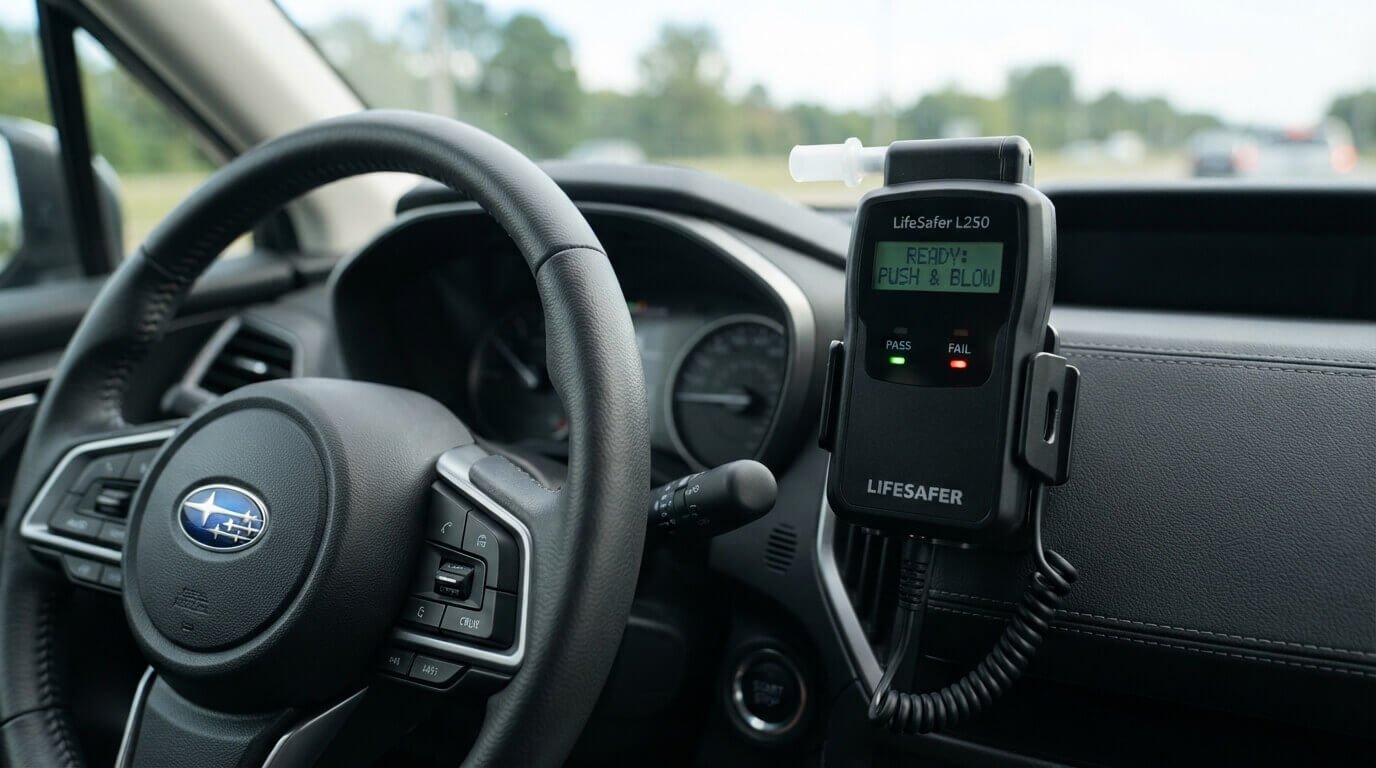
A car breathalyzer — also called an ignition interlock device (IID), BAIID, or interlock system — is a small unit wired into your vehicle’s starter. Before the engine will turn over, you have to blow into the device. It measures your breath alcohol concentration (BrAC), and only if you’re under the legal threshold will the vehicle start.
Courts and state DMVs require these devices most often after a DUI conviction, but some drivers choose voluntary installation even without a court order — for instance, as a condition of an employer, or simply as a personal accountability tool.
How Does a Car Breathalyzer Work?
The mechanics are straightforward, but the exact steps vary slightly by provider:
- Activate the device. Press a button or wait for the unit to power on and prompt you.
- Submit your breath sample. Most devices use a blow-inhale-blow pattern — blow for 1–2 seconds, inhale for 1–2 seconds, then a final blow of 3–4 seconds. Some older or budget devices instead require humming within a set frequency range, which is widely considered less convenient.
- Wait for the result. The device calculates your BrAC almost instantly.
- Start the car — or don’t. If you pass, the vehicle starts normally. If you fail, the ignition stays locked, and after repeated failures the device may trigger a temporary lockout period before you can try again.
Rolling Retests: It Doesn’t End at Startup
Passing the initial test isn’t the end of the process. Most states require random retests (sometimes called rolling retests) while you’re driving, to confirm you haven’t been drinking mid-trip. The device will alert you a few minutes in advance so you can safely pull over, and you’ll use the same breath pattern as the initial test. Refusing or missing a retest is typically logged as a violation — the same as failing one.
Ignition Interlock Device Types: Base Model vs. Camera and GPS
This is where most manufacturer pages stay vague, but it directly affects your cost:
| Feature | Base Model | Camera-Equipped | GPS-Enabled |
|---|---|---|---|
| Meets NHTSA model specs | ✅ | ✅ | ✅ |
| Verifies who is blowing | ❌ | ✅ | ❌ |
| Tracks vehicle location | ❌ | ❌ | ✅ |
| Typical monthly cost | Lowest | Moderate | Highest |
| Common state requirement for | First offense (many states) | Repeat offenders, high-BAC cases | Certain states, aggravated offenses |
Which type you’re required to install depends entirely on your state and the nature of your offense — first-time offenders are often approved for a base model, while repeat or aggravated cases frequently mandate a camera or GPS unit.
How Much Does a Car Breathalyzer Cost?
There’s no single national price, because every state regulates its own interlock vendors and requirements. That said, here’s a realistic breakdown of what to expect:
- Installation fee: Typically around $70–$150, though it can run higher depending on your vehicle and device type.
- Monthly monitoring/service fee: Often equivalent to roughly $3 a day, or somewhere in the $60–$100/month range — less than most people spend on coffee.
- Calibration/service visits: Usually included in your monthly fee, but required every 30–60 days (sometimes up to 90, depending on your state).
- Removal fee: Often free if the device is undamaged and your monitoring period is complete; damage or tampering can trigger extra charges.
- Lockout reset fee: If the device enters permanent lockout due to failed tests or tampering, expect an additional charge to have a technician reset it — sometimes requiring a tow.
Voluntary installations tend to cost less overall, since the provider doesn’t need to transmit compliance data to a court or DMV.
Many providers also offer financial assistance programs, discounts, or lease agreements to help offset costs — it’s worth asking directly, since court-ordered installation isn’t optional but the specific plan often is.
Important: you cannot buy an ignition interlock device outright. These units must be leased through a state-approved provider for the length of your monitoring period. Devices sold independently online may be uncertified or stolen, which can put your compliance — and your driving privileges — at risk.
Installing and Calibrating Your Car Breathalyzer
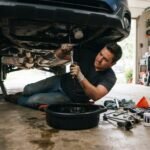
Installation is usually a same-day process:
- Appointments generally take about an hour.
- You’ll need someone to drive you there, since the device won’t recognize your vehicle as compliant until installation is complete.
- The technician walks you through activation, the breath pattern, and what each sound and light means.
- Before you leave, you’ll schedule your first service/calibration visit.
Calibration happens on a recurring schedule (commonly every 30–90 days depending on your state) at a certified service center. A technician inspects the device, recalibrates its sensor, and uploads your compliance data to the monitoring agency — whether that’s the DMV, the court, or your probation officer.
Missing a scheduled service visit — or failing to reschedule within about a week — can trigger a permanent lockout, so treat these appointments like you would any legal deadline.
What Happens If You Violate the Program?
Your total time with the device isn’t fixed — it depends on your compliance:
- Clean record, no violations → you complete your restricted driving period in the minimum required time.
- Multiple violations (failed tests, missed appointments, tampering attempts) → your monitoring period can be extended.
- Serious violations in some states → you may be required to restart your restricted driving period from day one.
This is one of the most overlooked cost factors: a few avoidable violations can effectively double your total interlock expenses by extending the program.
Frequently Asked Questions
Can I refuse a retest while driving? No — refusing or ignoring a rolling retest is generally treated the same as a failed test and logged as a violation.
Will my device work in cold weather? Most certified devices are designed to function across a wide temperature range, but always check your specific provider’s specs, since extreme cold can occasionally affect breath sensors.
Do all states require the same type of device? No. Requirements vary significantly — some states mandate GPS or camera units for repeat or high-BAC offenders, while first-time offenders in other states may only need a base model.
Can I have the device removed early? Only if your state or court authorizes early removal, typically after demonstrating sustained compliance. Removing it yourself is illegal and will likely extend your restriction period.
The Bottom Line
A car breathalyzer isn’t just a legal formality — it’s a system with real mechanics, real recurring costs, and real consequences for non-compliance. Budget for installation, monthly service, and the possibility of extra fees for lockouts or damage, and treat every scheduled calibration visit as non-negotiable. Do that, and the fastest, least expensive path through your interlock program is simply staying compliant from day one.